Why Is Kauai the Least Visited Island?
Why Kauai draws fewer visitors than Oahu and Maui: no road rings the island, about 70% is roadless, and the quiet is exactly the reason to come.
 By Kainoa Kealoha, Kauai tour specialist and island experience guide
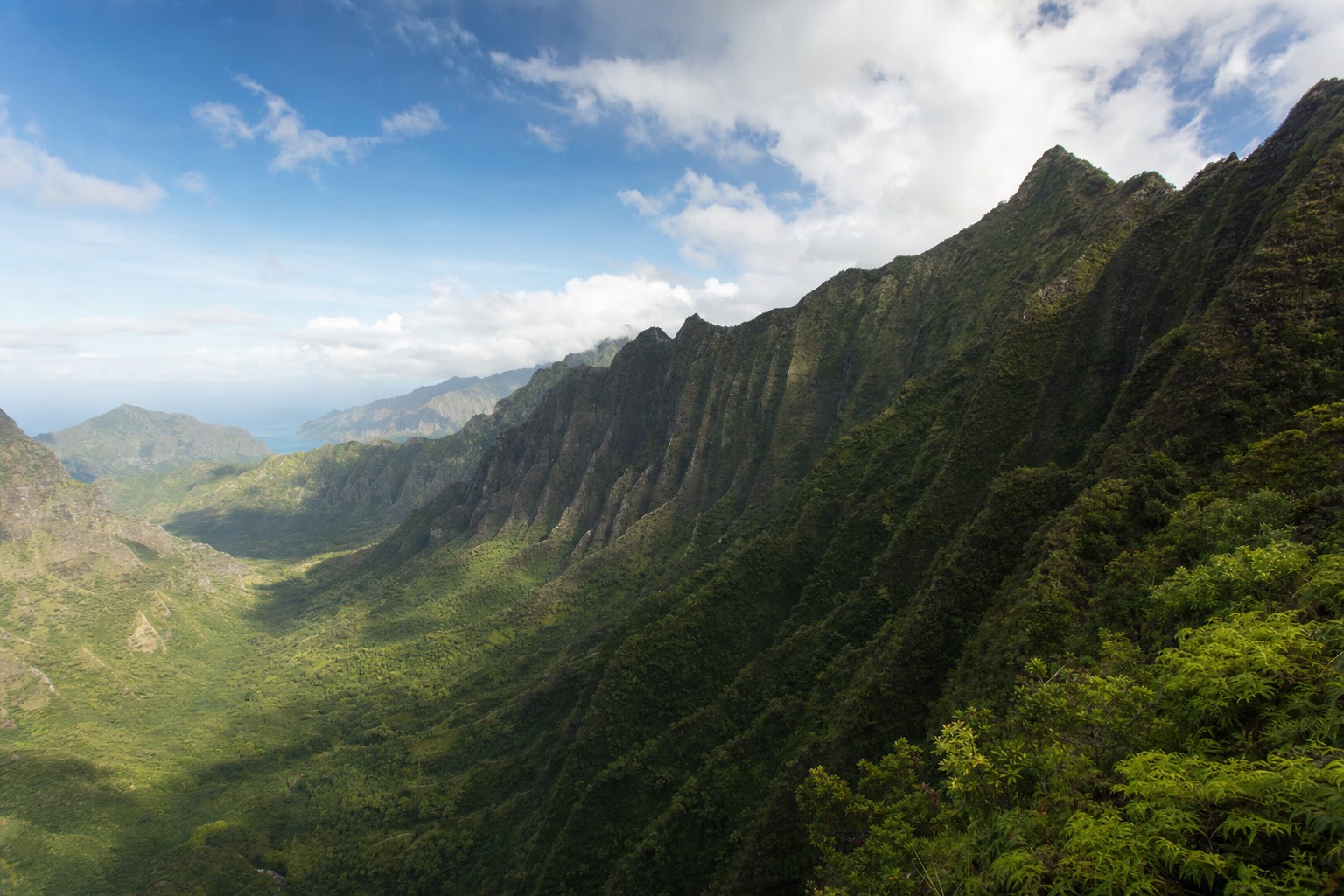
Stand at a lookout on Kauai's west rim in the late afternoon and count the people around you. Often you can do it on two hands. An hour's flight away, Waikiki is shoulder to shoulder. Same state, same ocean, and yet Kauai runs at a completely different human density, which raises the obvious question travelers keep typing into search bars: why does the prettiest island get the fewest visitors? The answer is structural, not a verdict on the place. And once you understand it, the case for coming here gets stronger, not weaker.
Booking choice: Less infrastructure is part of the appeal. If you want to see beyond the road network, compare a flight with a separate coast cruise; neither is required for a good independent trip. Explore this outing
Why is Kauai the least visited of the main Hawaiian islands?
Of the four major tourist islands, Kauai draws fewer visitors than Oahu and Maui, and the reasons are physical: no road rings the island, roughly 70 percent of it is unreachable by road at all, resort zones are fewer and smaller, more rain feeds the green interior, and nightlife is quiet. The island simply has less built capacity for crowds.
Start with the road map, because everything follows from it. Kauai has one coastal highway that does not connect into a loop: it dead-ends on the north shore past Hanalei and dead-ends again on the west side, where Route 550 climbs to the Pu'u o Kila overlook and simply stops, with no through-road to the north shore, as the state's Koke'e State Park page confirms. Between those two dead ends sits the Na Pali Coast, 17 miles of cliffs rising past 3,000 feet with no pavement anywhere near them.
An island you cannot drive around is an island mass tourism struggles to fill. There is no ring of resort corridors like Oahu's south shore or Maui's leeward strips; Kauai's resort zones cluster in a few pockets and stay low-rise. Add the rain that keeps the island this green, and a culture that mostly goes to bed early, and you get a destination that self-selects. People wanting shopping, clubs and a scene pick Oahu. People wanting the raw island pick this one.
| Island | Character | Built for |
|---|---|---|
| Oahu | Urban, Waikiki towers, real nightlife | The scene, shopping, first trips |
| Maui | Long leeward resort corridors, famous drives | Polished resort weeks |
| Hawai'i (Big Island) | Volcano country, huge distances | Road-trippers and geology fans |
| Kauai | One dead-end road, roadless green interior, small resort pockets | Scenery-first travelers and morning people |
What does the roadless 70 percent actually hide?
Most of the island's signature sights: the Na Pali cliffs, the waterfalls of the wet interior, Manawaiopuna "Jurassic" Falls on private land, and the summit country around Mount Wai'ale'ale, among the wettest places on Earth. With roughly 70 percent of Kauai unreachable by road, boats, helicopters and guided access are the only ways in.
| Sight in the roadless zone | Only access |
|---|---|
| Na Pali Coast, 17 miles of cliffs to 3,000+ ft | Boat from Port Allen or Kikiaola, helicopter, or the 11-mile Kalalau Trail on foot |
| Manawaiopuna "Jurassic" Falls, ~400 ft, private Robinson land | Air only; Safari Helicopters flies past it |
| Mount Wai'ale'ale's wet interior | Helicopter overflight |
| Kipu Ranch, ~3,000 private acres, no public road | Guided ATV tour on the ranch |
| Hanakoa and Kalalau valleys past the day-hike section | Wilderness camping permit and serious hiking |
Look at the right-hand column. Not one entry says "drive there." The Kalalau Trail, the one land route along Na Pali, runs 11 miles each way, and hiking past Hanakapi'ai requires a wilderness camping permit, per the state's Kalalau Trail page. That is why the tour economy here looks the way it does. Boats and helicopters are not add-ons for people who dislike walking; they are the infrastructure for the majority of the island. It also explains a happy side effect: the roadless zone cannot be crowded in any normal sense, because everyone in it arrived by permit, hull or rotor.
Is Kauai too quiet at night?
Quiet, yes; dead, no. Evenings here run to sunsets, luaus, one famous Friday street festival in Hanapepe, and early nights before big mornings. If your trip depends on bars and late music, Oahu fits better. If your best hour is sunrise, Kauai's evening calendar is exactly right.
| Evening mood | What Kauai offers |
|---|---|
| Big show night | Luau Kalamaku's theatrical dinner show near Lihue, or Smith's garden luau in Wailua |
| Local street scene | Hanapepe Friday night art walk, food vendors and galleries |
| Romantic and free | Sunset at a west- or south-facing beach |
| Early-to-bed | The island default; boats and helicopters fly in the morning |
The luau is the closest thing the island has to nightlife with production values, and it is genuinely good here: dinner and show in one ticket, roughly four hours, covered in depth on our Kauai luau page. The rest of the evening culture is the street-and-sunset kind, which our guide to non-touristy Kauai maps town by town. There is a rhythm logic to the quiet, too. Na Pali boats leave in the morning. Helicopters fly on morning light and morning weather. Canyon lookouts cloud over from late morning. The island's schedule pushes its best hours to the front of the day, and the nightlife, or lack of it, is downstream of that.
Is being the least visited island actually a reason to come?
Yes, and it is the honest sales pitch: every structural reason Kauai draws fewer people, the missing ring road, the roadless interior, the rain-fed green, the small resort footprint, is also the reason it looks the way it does. You trade convenience for the wildest scenery in Hawaii, with tours bridging the access gap.
Flip each "drawback" over and read the other side. No ring road means the Na Pali Coast was never paved into a scenic drive, so it still looks like the maps from before contact. Seventy percent roadless means the interior belongs to waterfalls and ridgelines, not subdivisions. More rain means the green that makes every first-time visitor go silent on the descent into Lihue. Fewer resort zones mean beaches where the crowd is a dozen families, not a thousand towels. Hawaii's official visitor site, gohawaii.com, leans on the same identity: Kauai as the state's wild garden island.
A boat and a flight give different views of the roadless landscape. The cruise keeps you at sea level beneath Na Pali; the helicopter opens up the valleys and waterfalls from above. Safari’s current itinerary pairs a Jurassic Falls flyover with an Olokele landing, while the private doors-off option focuses on waterfalls. Neither is necessary to enjoy Kauai’s accessible beaches and towns.
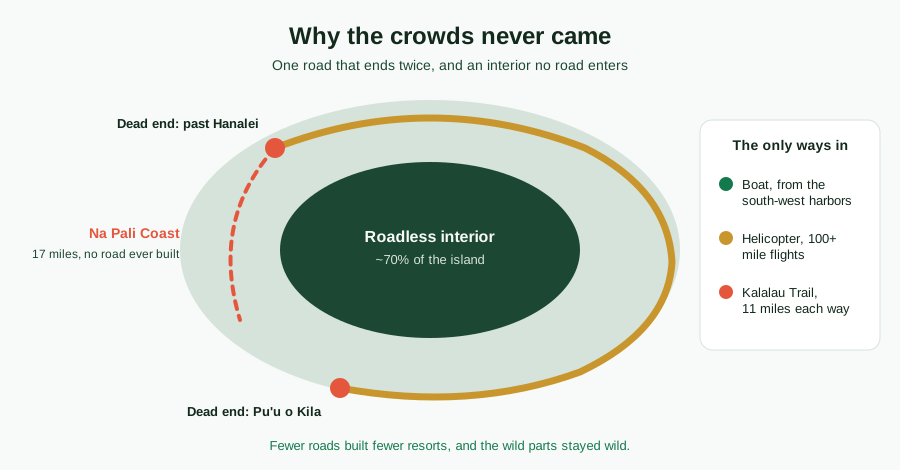
So the search question has a two-word answer, fewer roads, and a longer honest one: Kauai was never built out for volume, and the parts that stayed wild became the reason to come. The visitors it does get trade nightlife for morning light and drive a road that ends twice. If that trade sounds like a loss, the other islands are right there. If it sounds like the whole point, you already know which one to book.
Plan your paid experience
Check the outing that fits your day
Initial editorial choice, not a personalized eligibility check. Confirm the operator’s full requirements before booking.
Which side of a quieter island interests you?
This screens only the details you enter. Health, weight balance, language, pickup and all remaining restrictions still need operator confirmation. Time allowances exclude your journey to the meeting point.
- Private doors-off waterfalls flight — An open-door waterfall flight reserved for your party of two or three. 75-minute experience plus check-in. Minimum 40 lb, maximum 275 lb per person; three-person party maximum 560 lb with at most one guest over 200 lb. Seats assigned for balance; weather changes the route.
- Lucky Lady Na Pali snorkel cruise — The cliffs from sea level, with meals and snorkel equipment arranged. 5.5 hours on the water; allow extra check-in time. No hotel pickup. Moderate fitness; not for pregnancy, mobility difficulties or relevant recent injuries. Route and snorkeling depend on conditions.
- Luau Kalamaku dinner & show — Dinner and a theatrical Polynesian story at Kilohana in one evening. 4–6 hours depending on the package. Train and transport only with the corresponding package. Request dietary or access arrangements 48 hours ahead.
Compare your actual party totals
Enter current quotes in the same currency. “Separate spending” means costs you would actually avoid, not a rental day you still pay for.
Private doors-off waterfalls flight
Have your travel date in mind? Check it before arranging the rest of the day. An open-door waterfall flight reserved for your party of two or three.
75-minute experience plus check-in. Private helicopter for two or three paying guests and pilot commentary.
Minimum 40 lb, maximum 275 lb per person; three-person party maximum 560 lb with at most one guest over 200 lb. Seats assigned for balance; weather changes the route.
Schedule loading. You can still check dates directly on Viator below.
Scheduled dates are not confirmed seats. Select the same date on Viator to confirm availability and the final price.